Wednesday, December 1, 2010

Western Meadowlark


Certain birds pass through in the Spring and then again in the Fall.

Sunday, November 28, 2010

Coyote Bush

A non-descript shrub I despaired of identifying: unruly, evergreen, common.

Finally, beginning in late September, it began "blooming", tight white hairy tufts.


Small mystery solved.

Wednesday, November 17, 2010

Acorns

Mid-November, the birds (and squirrels) are stocking their larder with acorns.


This Scrub Jay is about to bury his acorn in the ground.


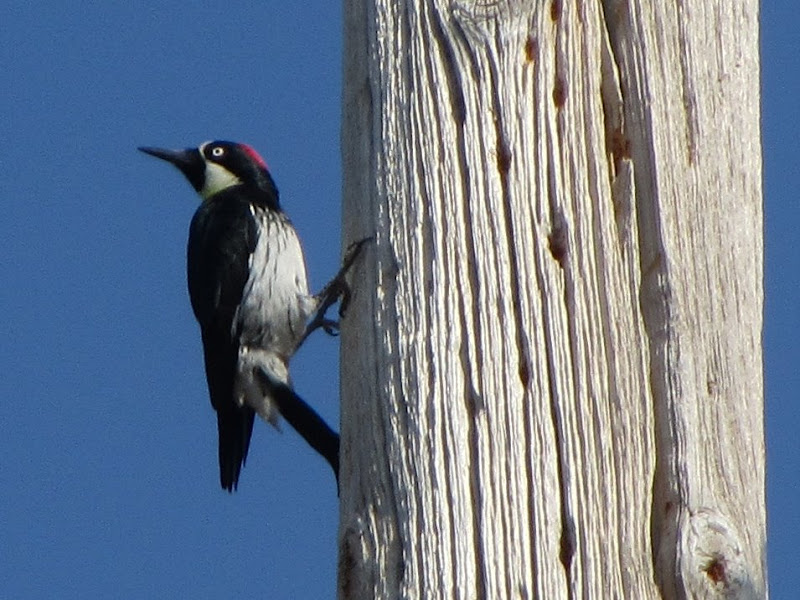
The Acorn Woodpecker uses and reuses holes pecked into trees and poles.


Come December this is what all the telephone poles will look like.


There are thieves. Squirrels pry the nuts from telephone poles, and flickers uncover acorns which they did not bury.

Question: what kind of acorns do the different animals favor?  Live, Blue, Black, Valley?

A magic sight the other day: a towering Valley Oak and scores of peckers and jays streaming into the dense boughs and leaving with an acorn.  It was a river of birds both ways.  Then the obvious dawned on me -- they pluck the acorns straight from the branches, and not off the ground.  Duh.

Wednesday, October 27, 2010

Cooper's Hawk

From the bedroom window.


Once I saw a Cooper's skulking near the birdfeeder.  He dove into a nearby tree, flushed a goldfinch, and chased it like a rollercoaster through the limbs and branches.

Cooper's resemble Sharp-shinned, but have longer neck and rounded, white-tipped tail.
Both have blood-red eyes!

Sunday, October 10, 2010

American Kestrel

Kestrels were in this same field last Spring. I noticed their return a few weeks ago.


There's an open barn where small birds nest, a field full of insects, and a telephone pole that makes an ideal perch.


Kestrels are the smallest falcon.  They feed on insects and sparrows.


Very handsome.

Tuesday, October 5, 2010

Pacific Gopher Snake


Struck by a car.  About 18" long.

Friday, October 1, 2010

California Harvester Ant

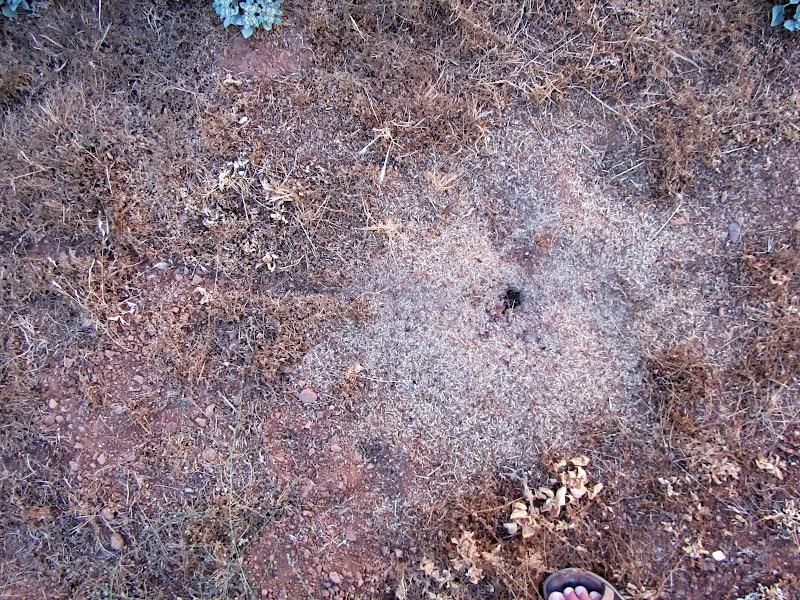
A typical harvester nest.  This photograph was taken in July.


The entrance is a rude crack in the ground surrounded by a halo of trash: shells & husks mainly, some tiny pebbles brought up from below, and an occasional insect corpse.

When they arrive, ants take their seed straight down the hole (presumable to storage chambers).  Sometime later detritus is brought back up.  In between, what happens? 


The trash seems to reflect what's currently in seed within 100 feet of the nest.  If that's the case, their harvest doesn't stay in storage long.  They do make mistakes and gather the inedible.


Below is the same nest yesterday (~2 months later).


The mix has largely changed.


The white parachute seeds appeared only yesterday.  I'll look around a see where they come from.

One curiosity is that harvesters feed on a single plant at a time; they don't scatter helter-skelter, but travel bee-line from the nest.

Here's a path running due left from the hole.  Up close it looks like they'd worn a gutter in the ground with a billion little footsteps.


Below groundlevel, it looks so:  an actual mold of a harvester nest.


The scientist poured molten copper down the hole of Florida harvesters in order to capture the architecture.